
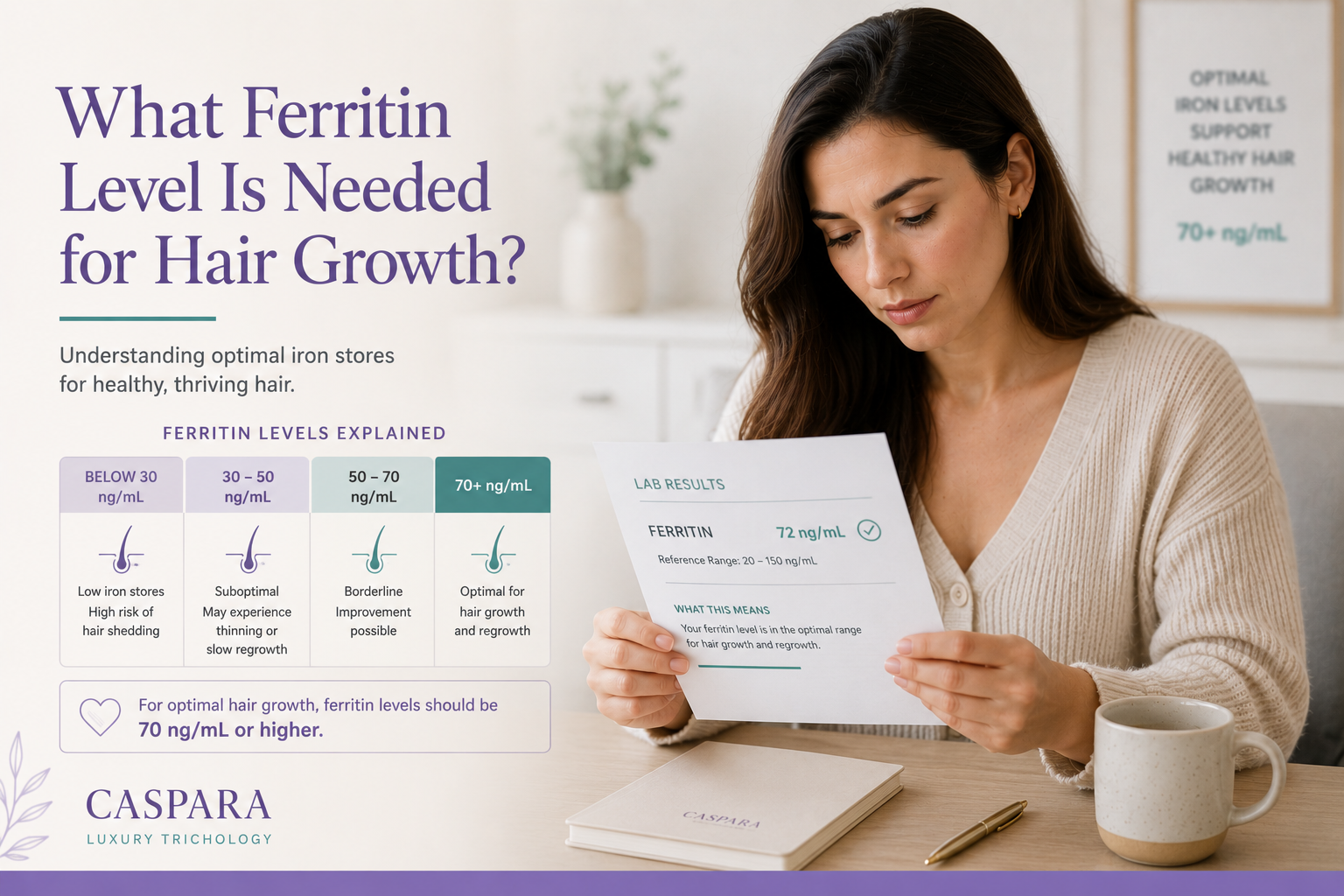
What Ferritin Level Is Needed for Hair Growth?
If you’ve been experiencing hair shedding or thinning and your lab results came back “normal,” ferritin may be the missing piece.
Ferritin is one of the most important markers for hair growth, yet it is often misunderstood. Many patients are told their iron levels are fine—even while their hair continues to shed.
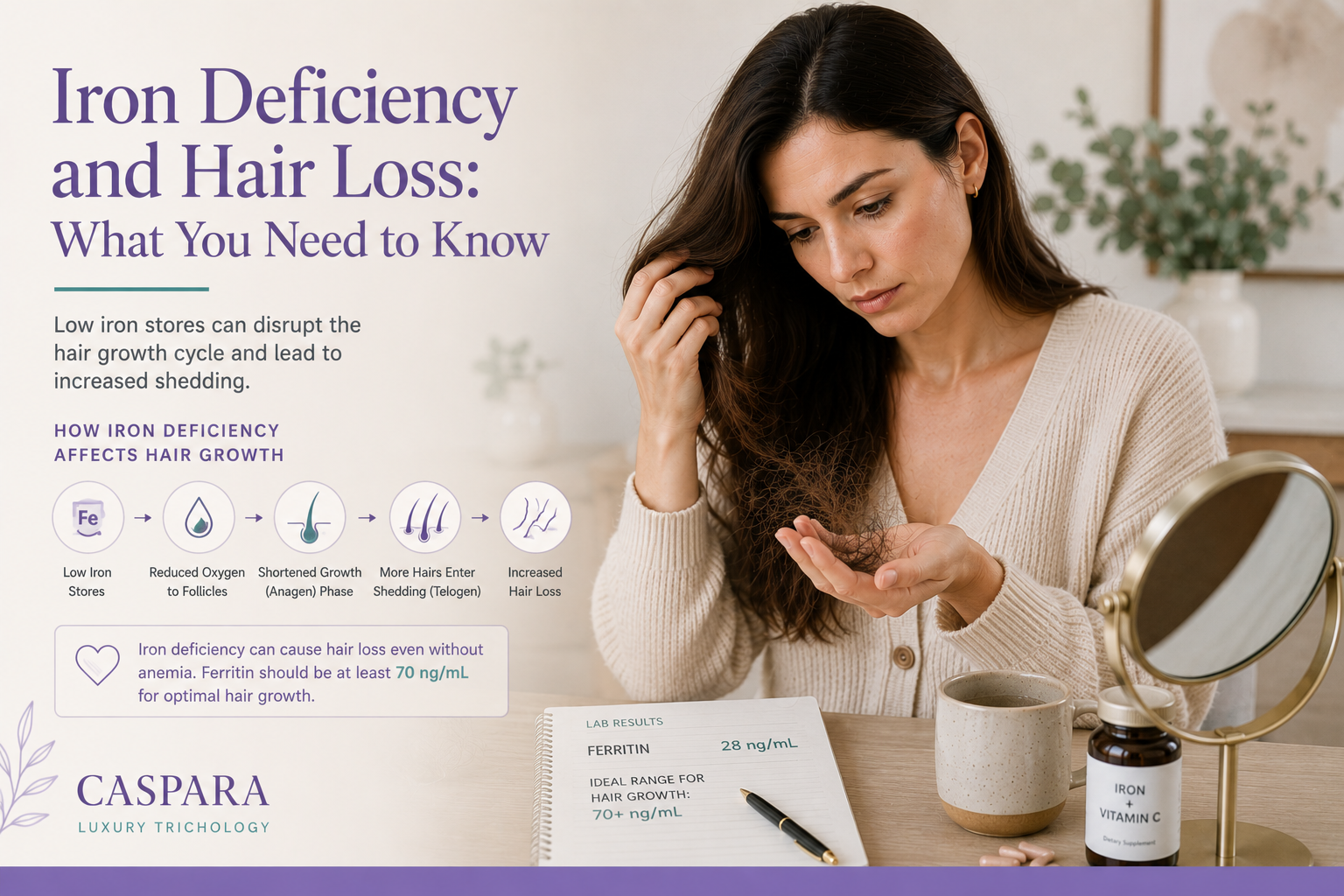
Iron Deficiency and Hair Loss: What You Need to Know
Iron deficiency is one of the most common—and overlooked—causes of hair loss, particularly in women.
While many people associate iron deficiency with fatigue or anemia, it can also have a significant impact on the hair growth cycle.
Even without full-blown anemia, low iron stores can disrupt hair growth and trigger excessive shedding.
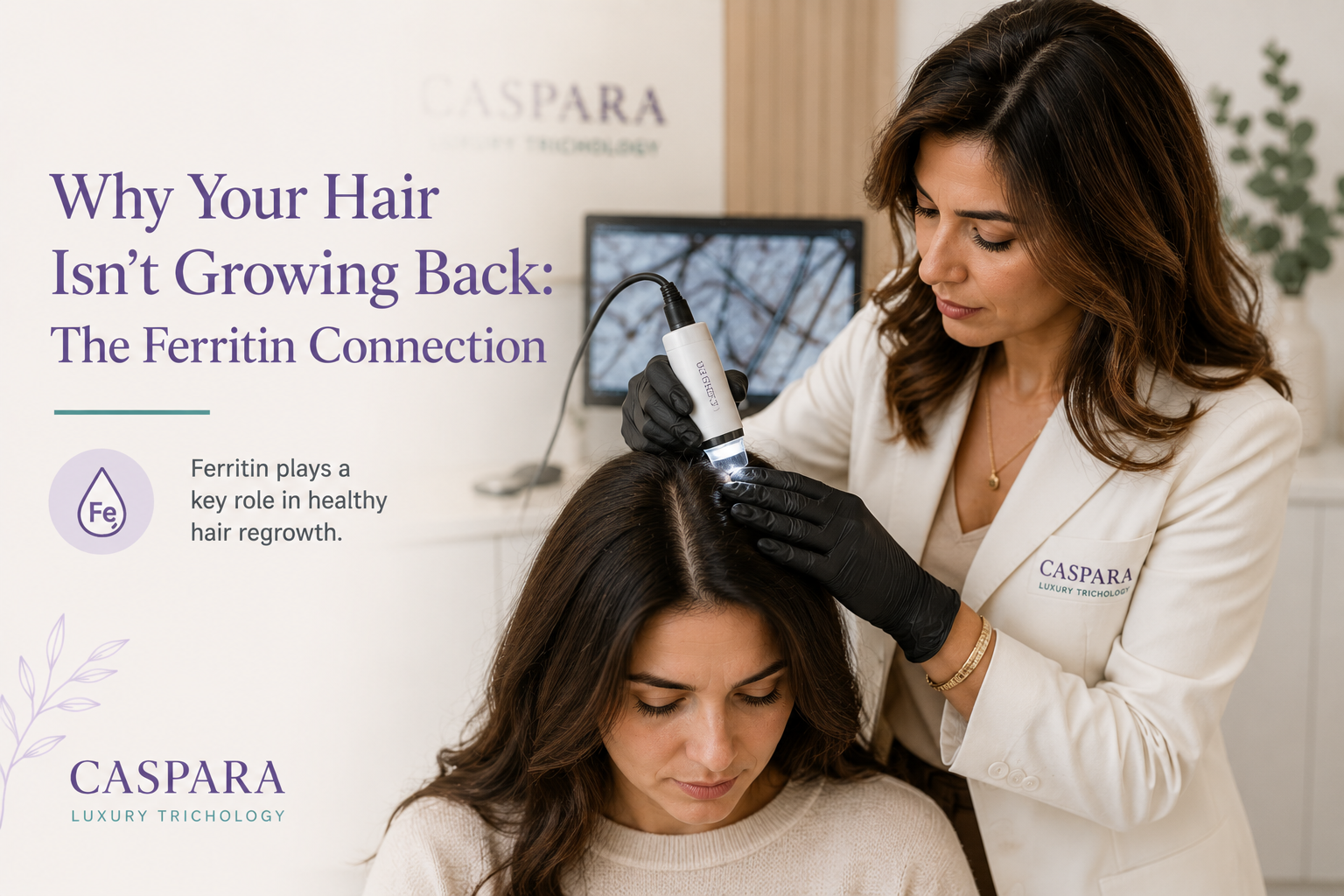
Why Your Hair Isn’t Growing Back: The Ferritin Connection
If your hair has stopped shedding but still isn’t growing back the way you expected, ferritin levels may still be too low.
Hair regrowth doesn’t just depend on stopping shedding—it requires optimal conditions for follicles to re-enter the growth phase.
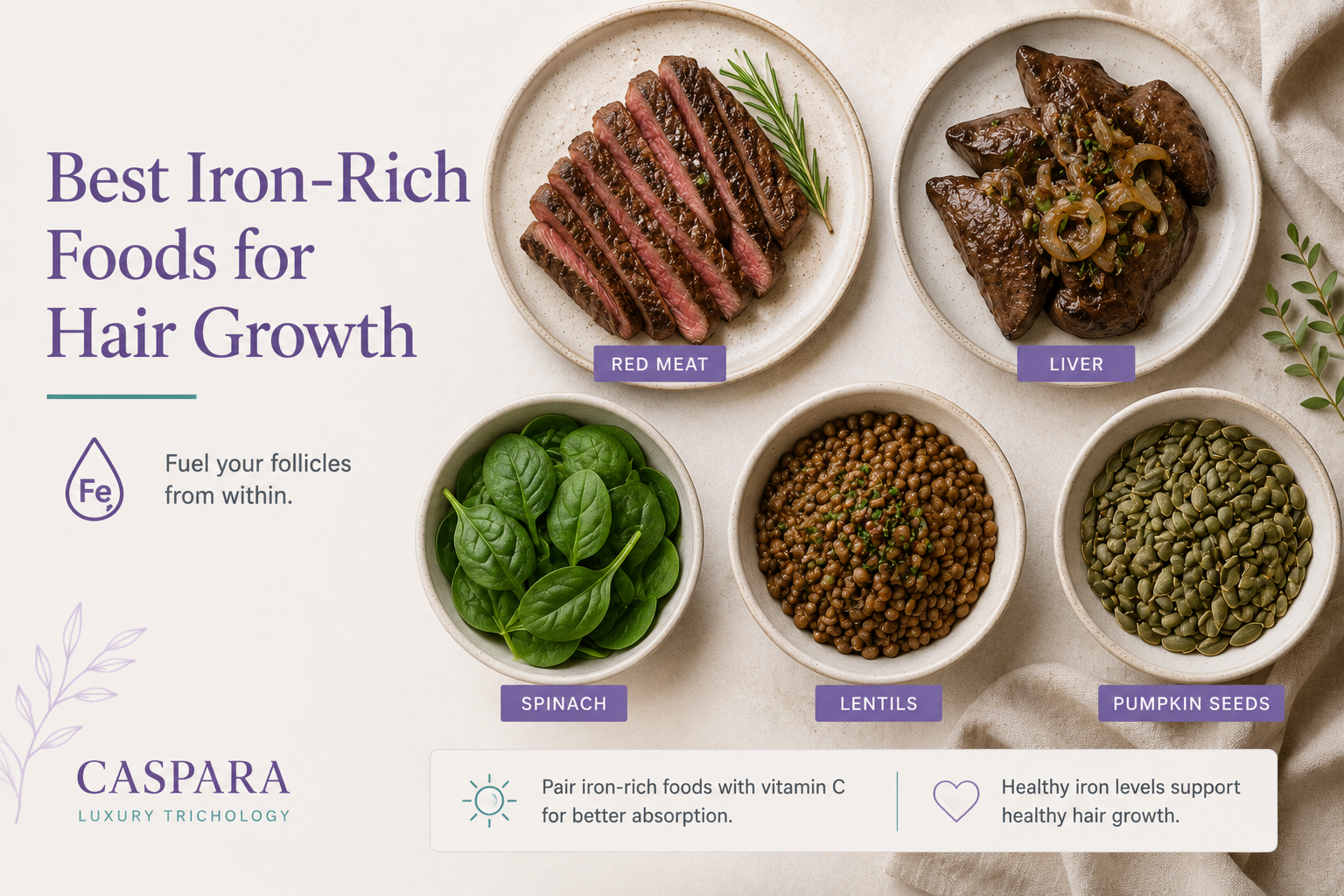
Best Iron-Rich Foods for Hair Growth
Diet plays a critical role in maintaining ferritin levels and supporting hair growth.
If iron intake is insufficient, ferritin levels will decline—impacting the hair growth cycle. Here are the best foods for increasing iron.
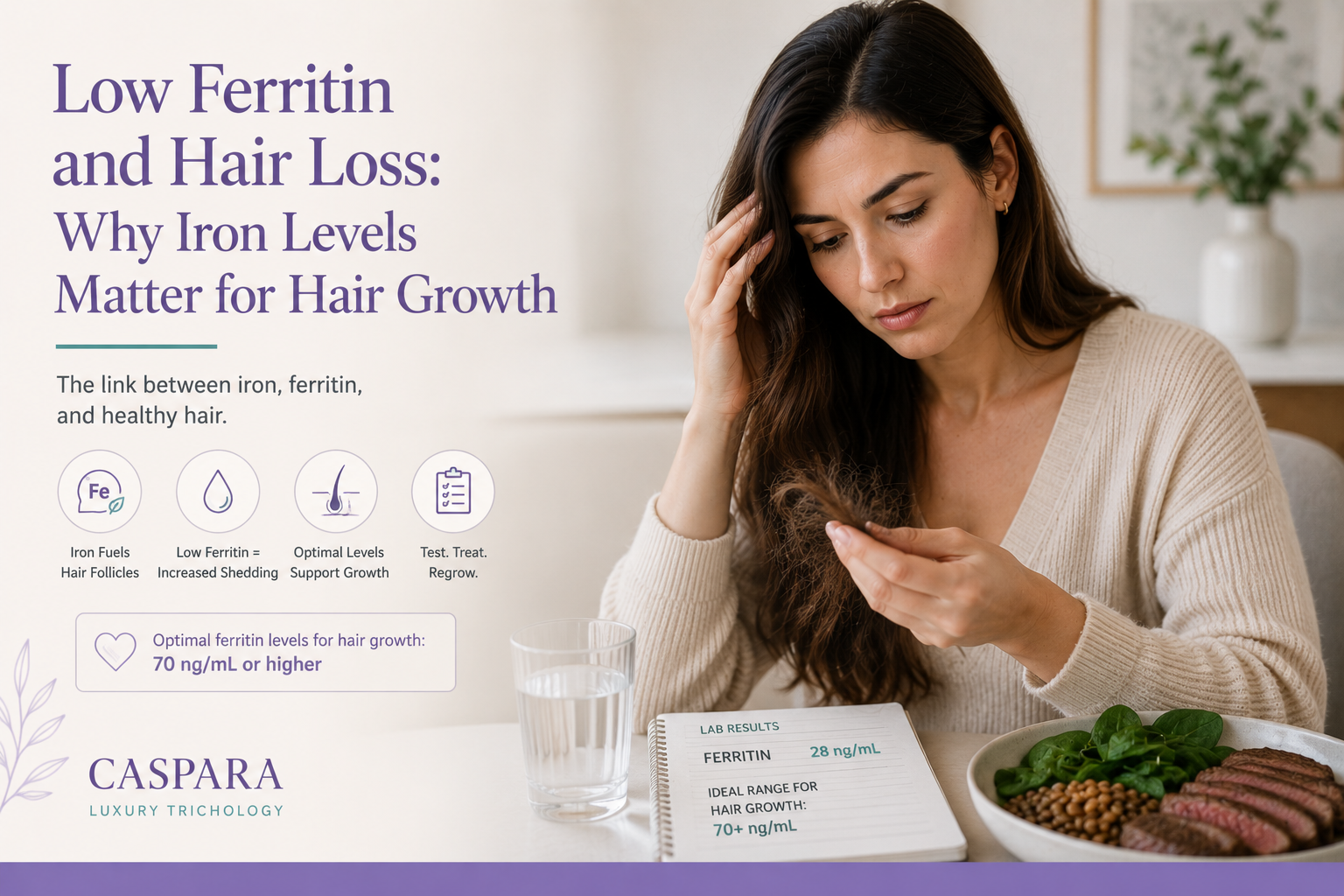
Low Ferritin and Hair Loss: Why Iron Levels Matter for Hair Growth
Hair loss is often attributed to stress, hormones, or genetics—but one of the most overlooked and common causes is low ferritin levels.
Ferritin is a protein that stores iron in the body. While standard lab ranges may consider ferritin levels as low as 10–20 “normal,” optimal levels for hair growth are significantly higher.
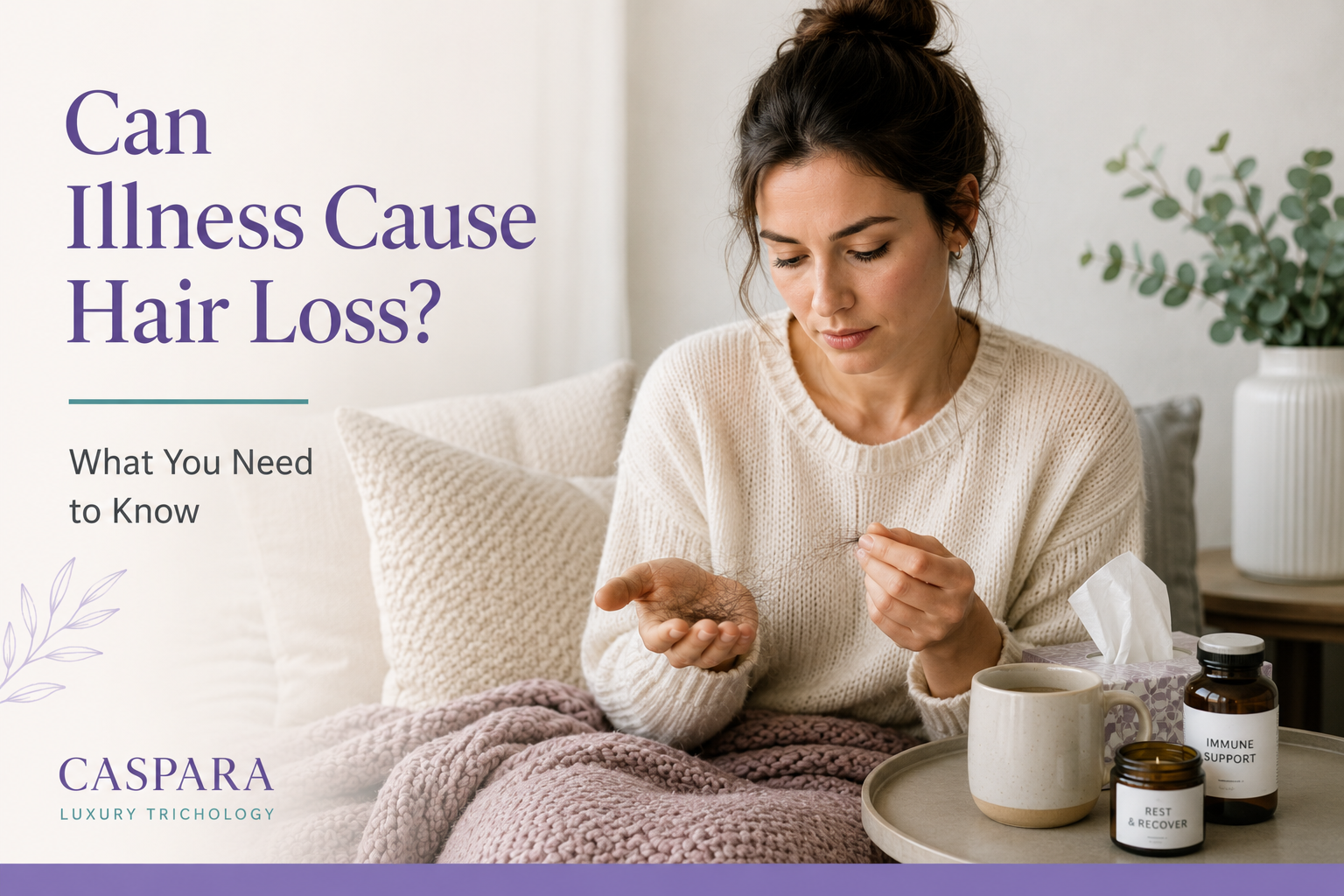
Can Stress Cause Hair Loss?
When the body experiences significant physical or emotional stress, it may shift resources away from nonessential functions like hair growth.
This disruption can trigger telogen effluvium, a temporary shedding condition.
Telogen Effluvium: Causes, Symptoms, and How to Recover From Excessive Hair Shedding
Understanding how telogen effluvium works can help determine whether shedding is temporary and what steps can support recovery. There are treatments that can speed up the regrowth of lost hair.
The Best Treatments for Postpartum Hair Loss
Postpartum hair loss is a natural response to hormonal changes after pregnancy. While the shedding phase is temporary for most women, treatments can help support hair regrowth and improve scalp health during recovery.
How to Stop Postpartum Hair Shedding and Support Hair Regrowth
While postpartum hair loss is usually temporary, there are ways to support the hair growth cycle and encourage healthier regrowth.
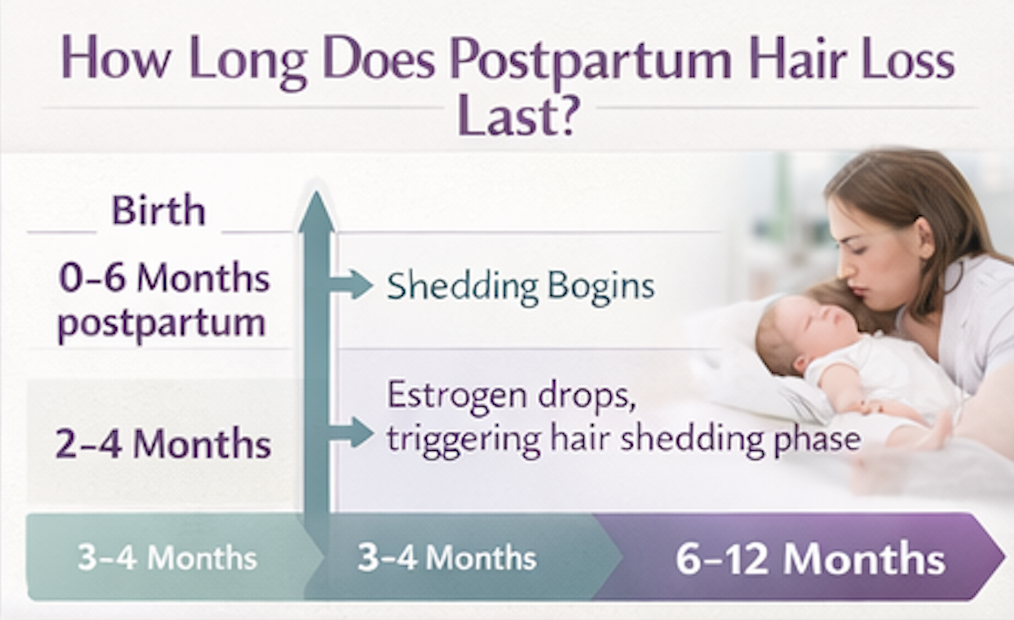
How Long Does Postpartum Hair Loss Last?
Fortunately, postpartum hair loss is usually temporary. In most cases, the shedding lasts only a few months before the hair growth cycle returns to normal.
Understanding the typical timeline can help reassure new mothers that this phase is temporary and part of the body’s natural recovery after pregnancy.
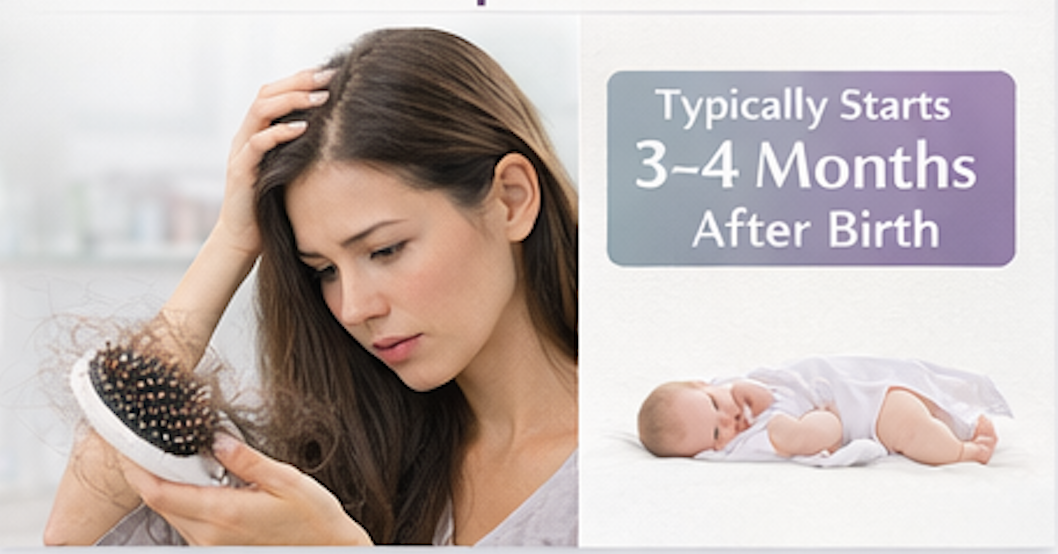
When Does Postpartum Hair Loss Start? Understanding the Timeline After Pregnancy
The delay is related to the natural timing of the hair growth cycle and the hormonal changes that occur after pregnancy.
Understanding when postpartum hair loss typically begins can help set expectations and prevent unnecessary worry.
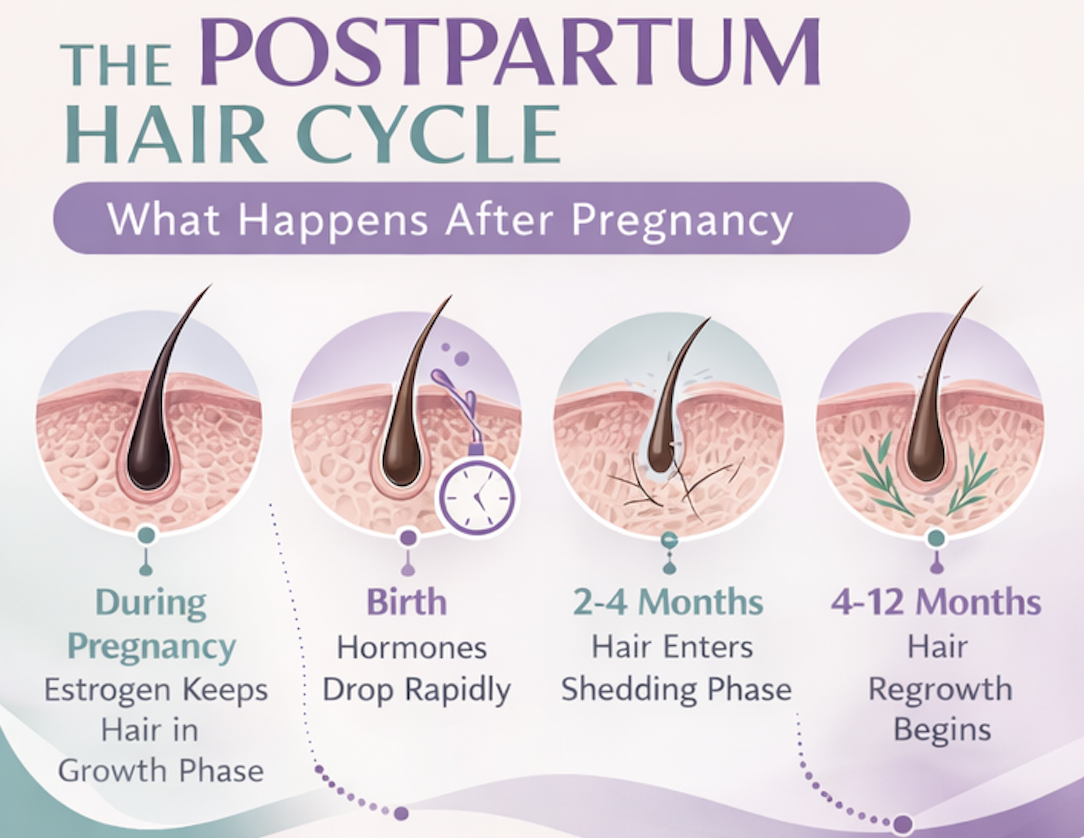
Postpartum Hair Loss: Why It Happens and How to Regrow Hair Faster
In most cases, postpartum hair loss is a temporary condition caused by hormonal changes that occur after delivery. While the shedding can feel dramatic, understanding why it happens can help you manage the process and support healthy hair regrowth.
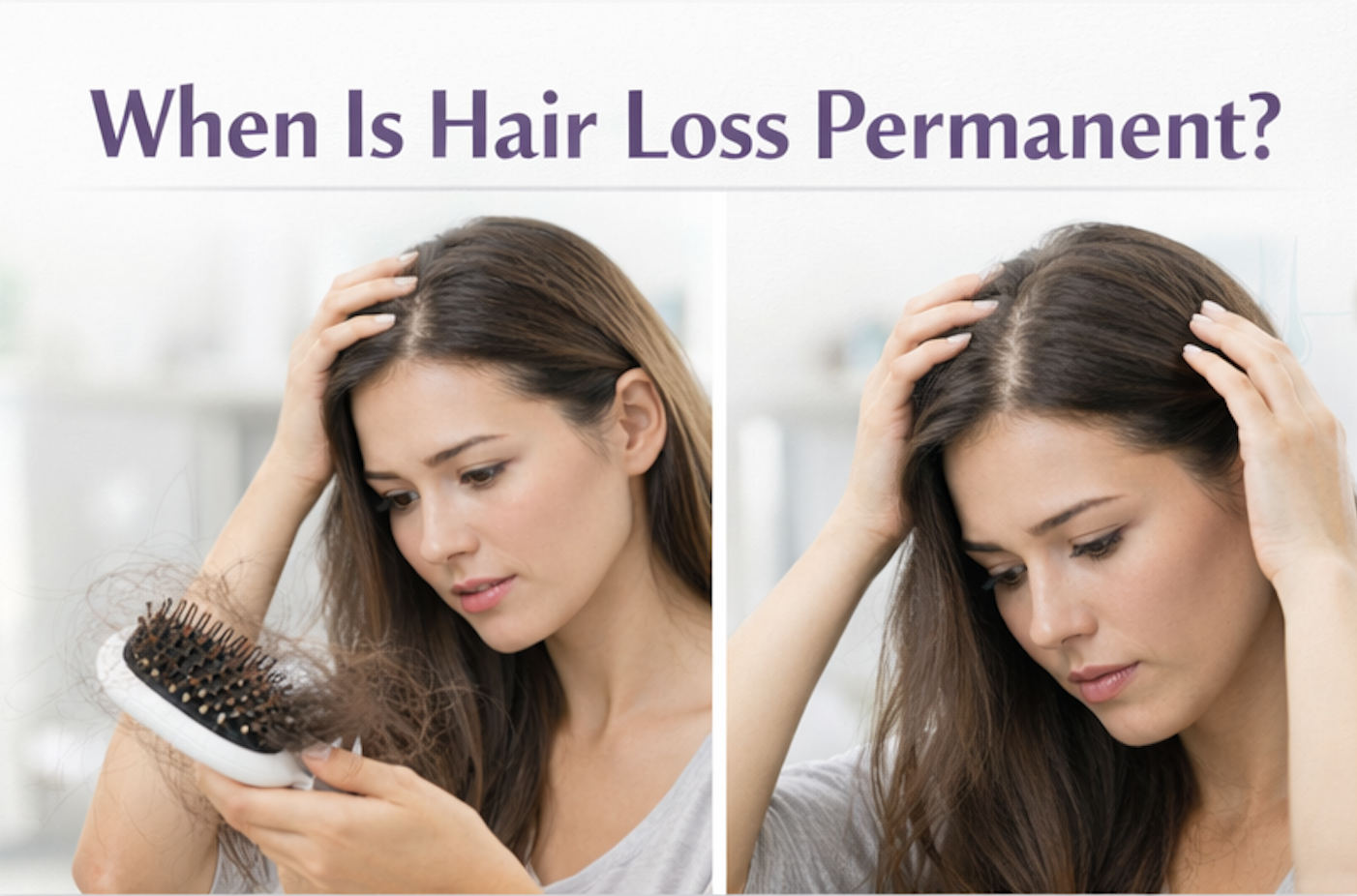
When Is Hair Loss Permanent? Understanding When Hair Can Grow Back
In many cases, hair loss is temporary and the hair will eventually return once the underlying cause is resolved. However, some types of hair loss can become permanent if the hair follicle becomes damaged or inactive.
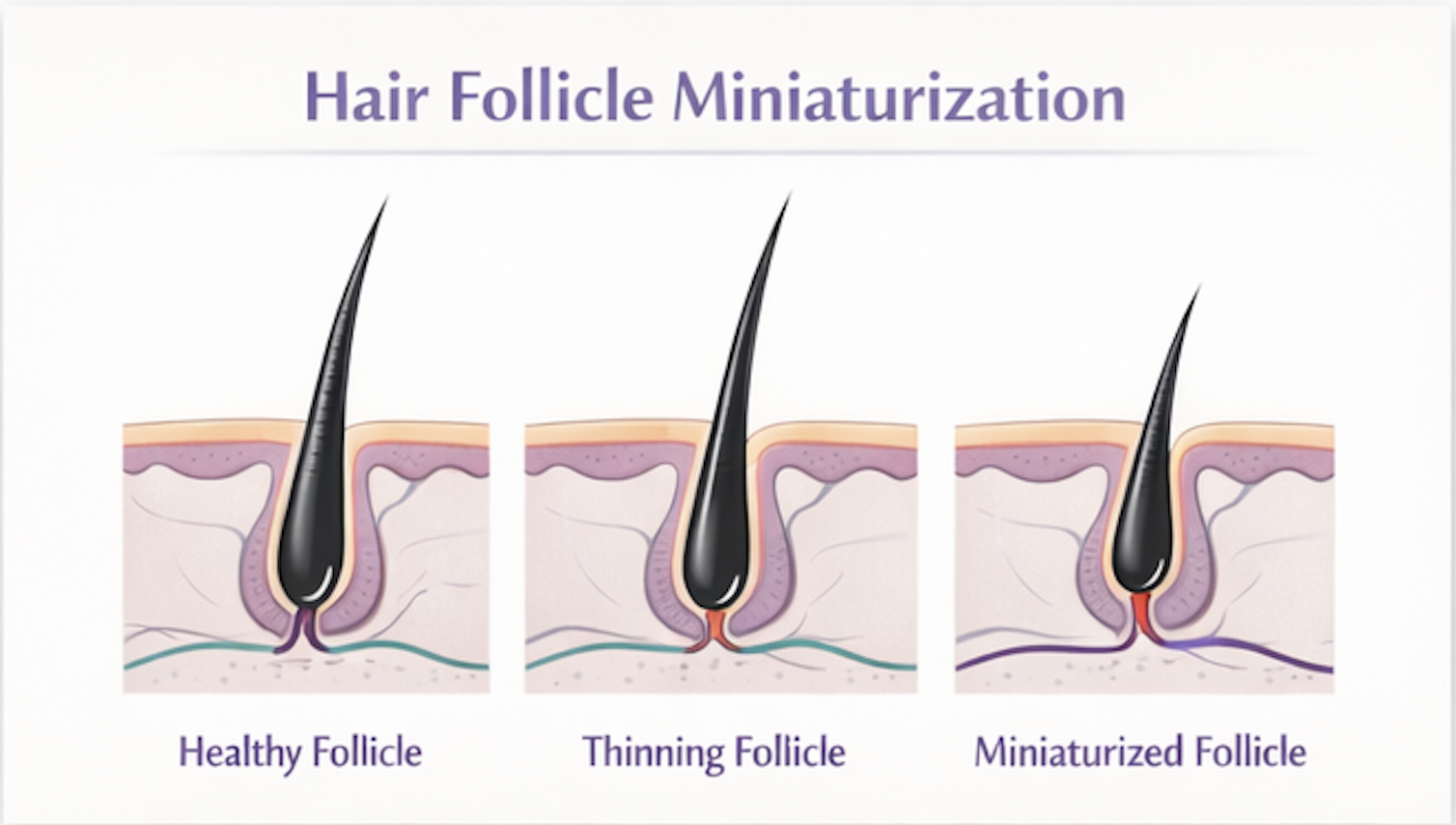
What Is Hair Miniaturization? The Early Sign of Hair Thinning
Many people assume hair loss only occurs when hair falls out. In reality, one of the earliest signs of hair loss is something much more gradual: the hair follicles themselves begin to shrink.
Understanding how miniaturization works is key to identifying hair loss early and preventing further thinning.
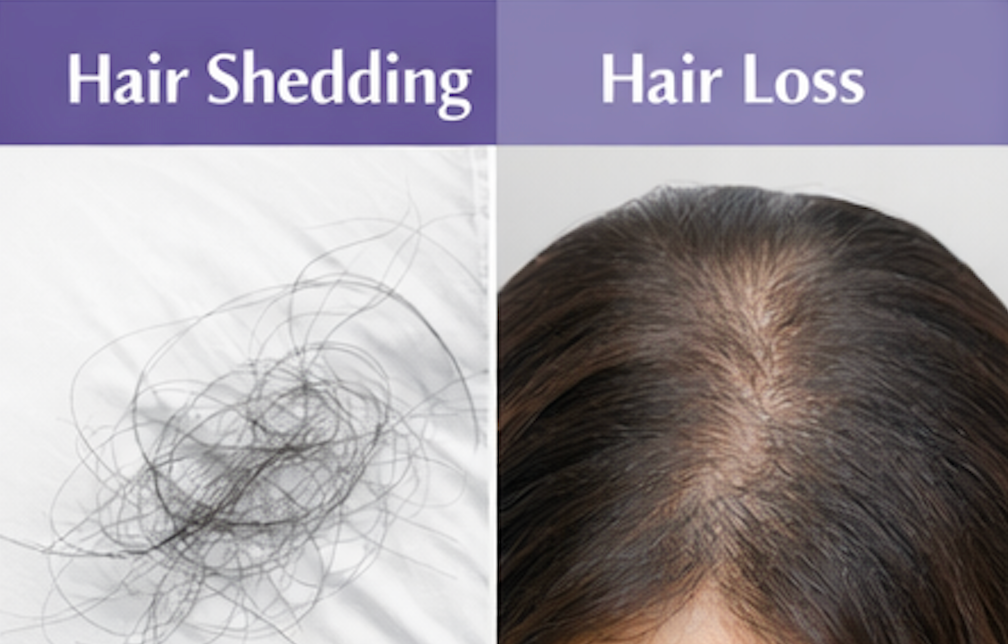
Hair Shedding vs Hair Loss: How to Tell the Difference
Understanding the difference is important because the causes, treatments, and long-term outcomes can vary significantly.
If you're unsure what you're experiencing, this guide explains the key differences between normal shedding, temporary hair loss, and progressive thinning.
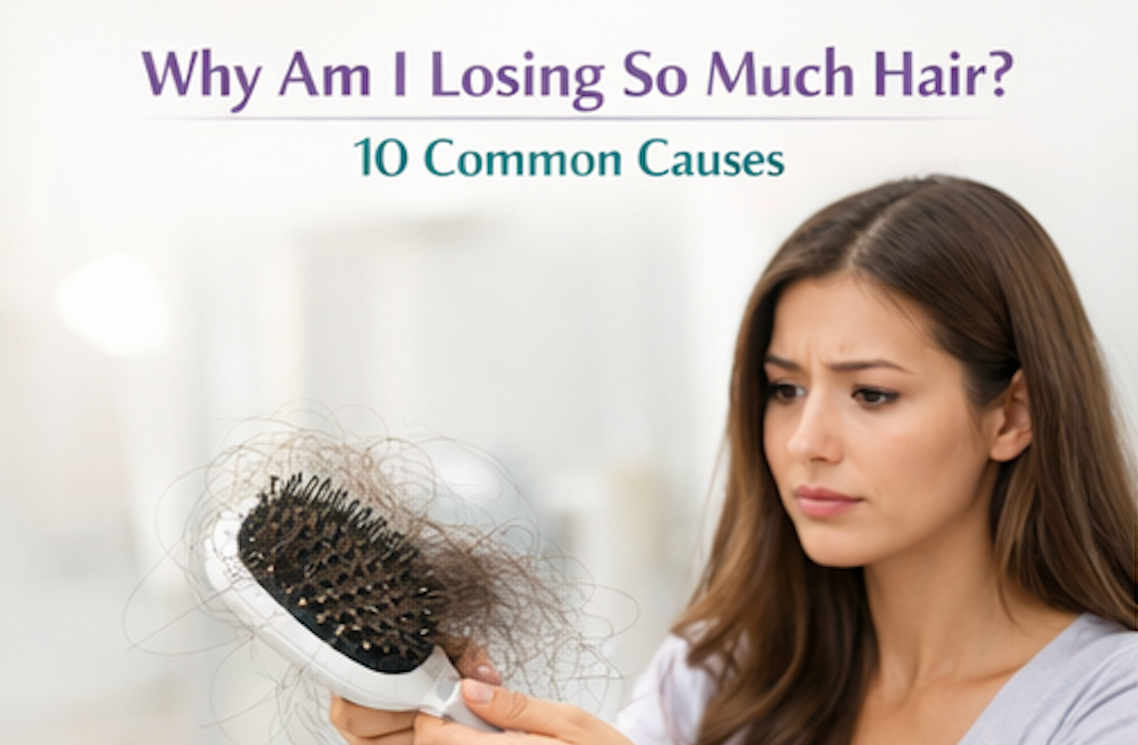
Why Am I Losing So Much Hair? 10 Common Causes of Hair Loss in Women
Understanding the most common causes of hair loss can help identify whether what you're experiencing is temporary shedding or a sign that the follicles need support.
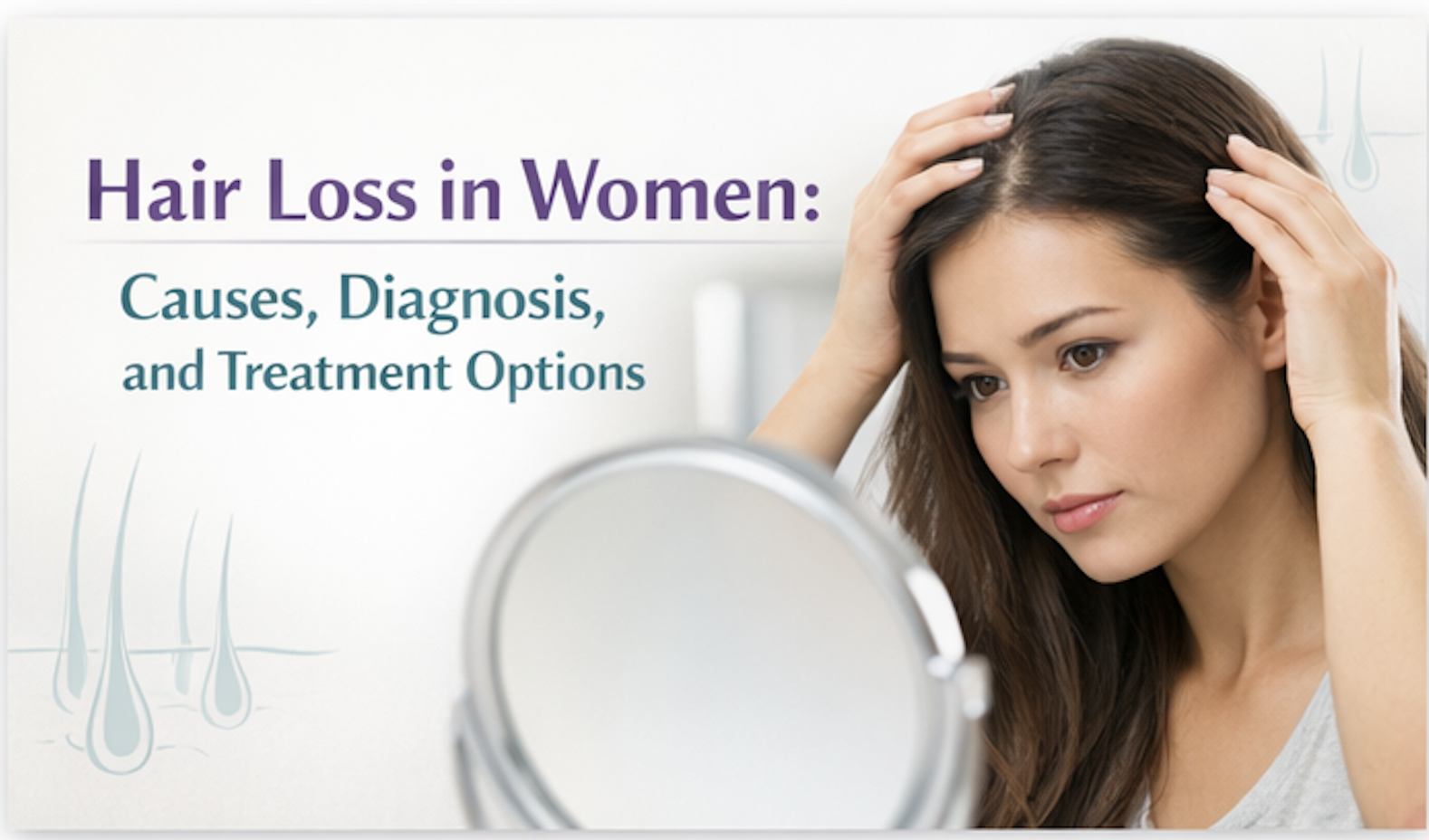
Hair Loss in Women: Causes, Diagnosis, and Treatment Options
Understanding why hair loss occurs is the first step toward restoring healthy growth.